From Airport Collaborative Decision-Making (A-CDM) to Total Airport Management (TAM), how can digitalisation, trusted data collaboration and AI agents support smarter airport operations?
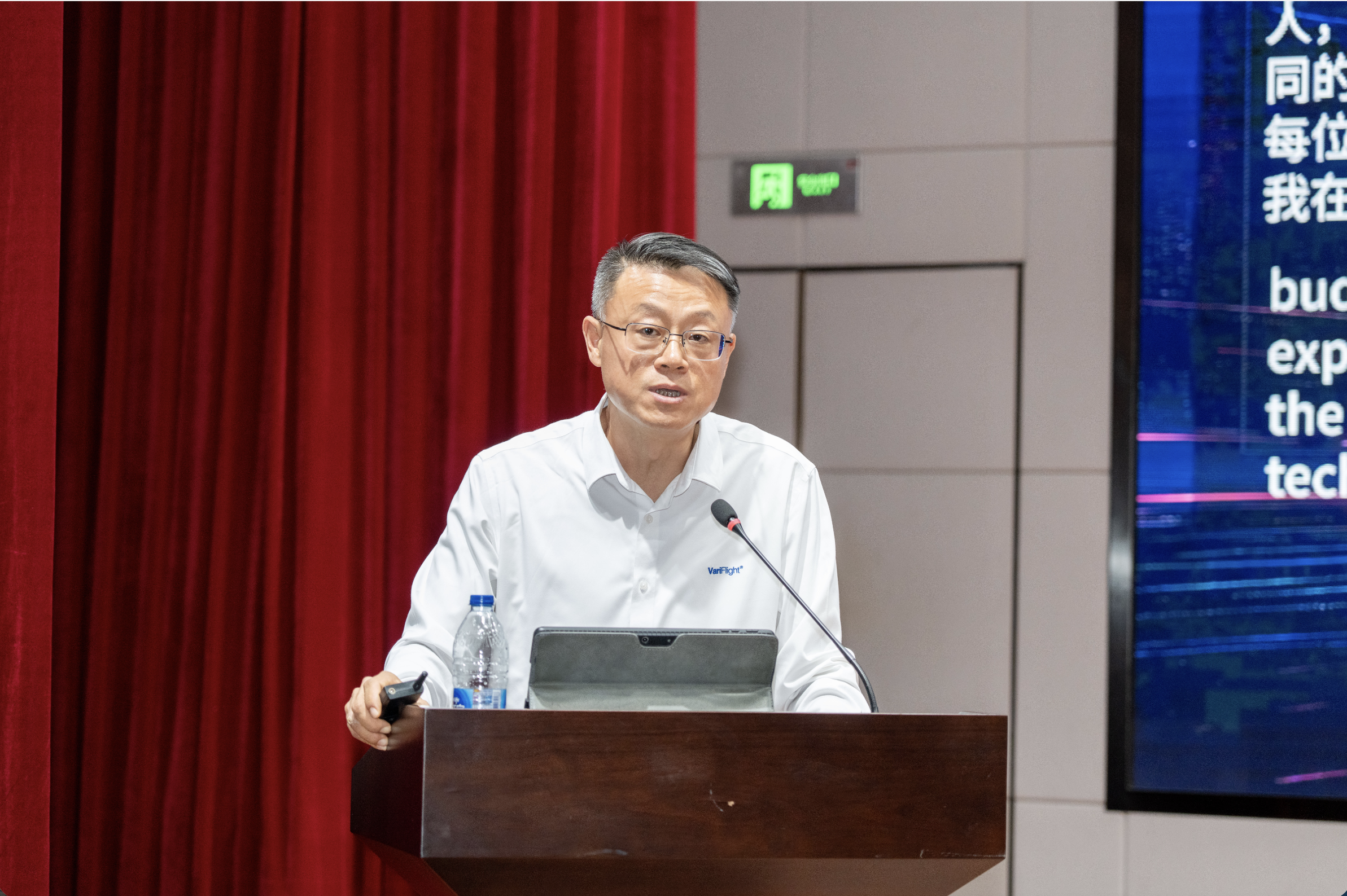
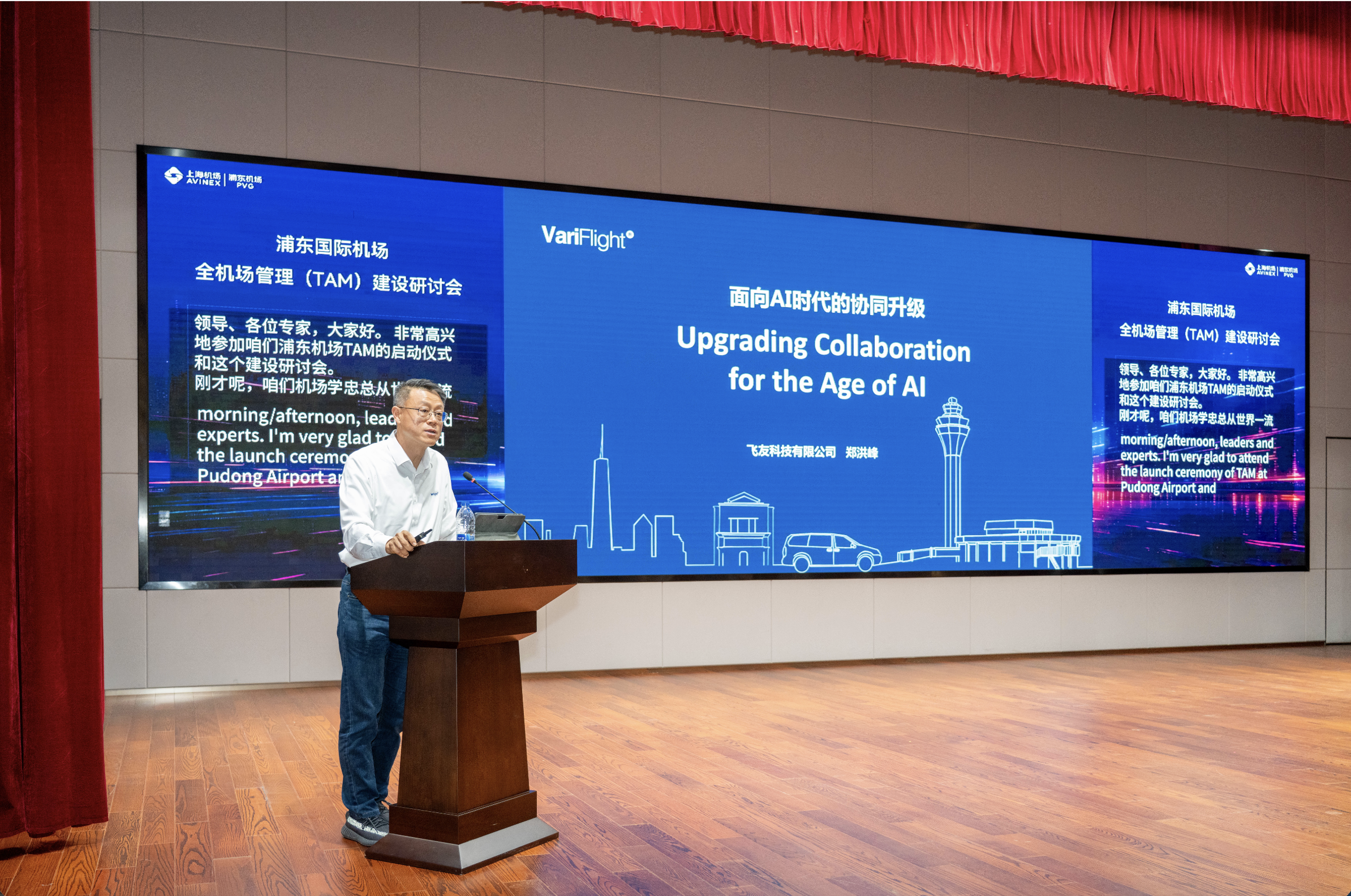
On 23 October, Shanghai Pudong International Airport hosted a seminar and launch ceremony for its Total Airport Management (TAM) initiative, formally marking the start of its TAM development programme. At the event, VariFlight CEO Zheng Hongfeng shared his perspectives on advancing airport collaboration in the age of AI, outlining an approach that combines seven key performance objectives with digitalisation, trusted data spaces and AI agents.
For VariFlight, TAM represents a new direction for applying AI to smart airport development. As airport operations become increasingly complex, involving more stakeholders, interconnected systems and competing operational priorities, collaboration must go beyond exchanging information. Airports also need to anticipate operational changes, coordinate resources proactively and support more effective decision-making across business functions.
The evolution from Airport Collaborative Decision-Making (A-CDM) to Total Airport Management (TAM) reflects this shift towards a broader operational perspective, a longer planning horizon and more proactive decision support.
A-CDM has established an important foundation for collaboration among airports, airlines, air navigation service providers and other operational stakeholders. By sharing information around key flight milestones and coordinating activities through mechanisms such as milestone management, Target Off-Block Time (TOBT) prediction and pre-departure sequencing, stakeholders can work from a more consistent operational picture.
These mechanisms help improve coordination in flight turnaround, ground handling and departure management.
However, airport performance extends well beyond flight punctuality. During his presentation, Zheng Hongfeng highlighted seven performance objectives that should guide TAM development: safety, operating costs, capacity, revenue, resource utilisation, capital efficiency and passenger experience.
These objectives span airport operations, passenger services, commercial activities, resource allocation and investment planning. They are closely interconnected and may sometimes compete with one another. Improving one operational indicator in isolation does not necessarily lead to better overall airport performance.
The value of TAM lies in enabling stakeholders to coordinate across operational domains and make decisions that support the airport as a whole, while maintaining safety as the fundamental priority.
Building on the collaborative mechanisms established through A-CDM, TAM extends the scope of airport management in three key ways: it broadens the planning horizon, connects a wider range of business functions and deepens decision support. Airport management can therefore evolve beyond real-time monitoring and immediate operational response towards capacity forecasting, resource planning and dynamic optimisation.
More advanced airport collaboration requires more than a shared view of operational information. It requires stakeholders to identify potential issues earlier, assess their implications and coordinate resources and actions against common operational objectives.
Ultimately, the value of digitalisation should not be measured simply by the number of systems deployed or the volume of data collected. It should be demonstrated through measurable improvements in safety, efficiency, cost management and passenger service.
Achieving these outcomes requires not only stronger digital capabilities, but also more effective data collaboration and intelligent technologies that can support operational analysis and decision-making.
To support improvements across the seven performance objectives, VariFlight sees digitalisation, trusted data collaboration and intelligent decision support as complementary capabilities in the development of TAM.
The seven performance objectives define the direction of TAM, while digitalisation, trusted data spaces and AI agents provide enabling capabilities to help achieve those objectives.
Airport operations involve a large volume of dynamic information relating to flights, aircraft stands, vehicles, personnel, baggage and passengers. Technologies such as the Internet of Things (IoT) and intelligent video analytics can improve the completeness, timeliness and accuracy of operational data collection.
By connecting previously fragmented information, airports can turn operational events and resource status into structured data that can be monitored, analysed and traced. This provides a stronger foundation for forecasting, operational planning and coordinated decision-making.
The value of digitalisation lies not simply in collecting more data, but in making airport operations more visible, measurable and traceable. This creates the foundation for more precise operational management and collaboration across business functions.
Airport operations depend on multiple independent organisations, business systems and data owners. Effective collaboration therefore requires more than technical connectivity. Stakeholders also need clear arrangements governing data provenance, access permissions, usage rules and responsibilities.
Trusted data spaces offer a potential framework for enabling secure data exchange and trusted data use across organisational boundaries. They can help airports, airlines and other operational stakeholders access the information required for collaborative tasks while respecting their respective business boundaries and data governance requirements.
The objective is not simply to make data available, but to establish a trusted and controlled mechanism through which distributed information can support shared operational goals.
When implemented with appropriate governance and technical safeguards, trusted data collaboration can help reduce information silos and create a more consistent basis for cross-organisational coordination.
Once operational data becomes sufficiently complete, timely and trustworthy, AI can play a greater role in analysing operational conditions, identifying potential resource conflicts, comparing alternative plans and supporting decision-making.
As these capabilities mature, AI agents operating in different business domains may also be able to exchange information and coordinate analysis around shared operational objectives. Under appropriate supervision and within clearly defined permissions, such capabilities could support more efficient collaboration across airport functions.
Digitalisation, trusted data spaces and AI agents should not be viewed as isolated technologies. Together, they form a complementary capability framework for intelligent airport operations.
Their value lies not in adding more technology for its own sake, but in enabling data to serve operational needs more effectively, allowing AI to contribute to cross-functional analysis and decision support, and translating these capabilities into measurable improvements in airport performance.
One of the important developments in AI-enabled airport management is the gradual evolution from human-led processes supported by digital systems towards closer collaboration between people and AI agents.
VariFlight sees this evolution across three broad levels.
At the first level, operational personnel remain responsible for decisions, while digital systems provide information, monitoring and analytical support.
At the second level, people and AI agents work together to analyse operational conditions, evaluate alternatives and coordinate tasks.
At the third level, AI agents from different operational domains may collaborate in selected scenarios, subject to appropriate human oversight and operational controls.
This progression could change how information is processed and how coordination takes place across airport functions. Within clearly defined business rules and authorisation boundaries, AI agents may be able to support information analysis, scenario evaluation and task coordination, creating additional capabilities for cross-functional collaboration.
However, the value of TAM ultimately depends on how these capabilities address real operational challenges.
Consider airport transfer operations, where traditional management approaches may handle flight information, stand allocation and passenger processes through separate systems or workflows.
Within a TAM framework, combining flight updates, passenger transfer requirements, stand availability and airport operational constraints could enable more integrated decision support.
Rather than simply displaying the current operational situation, a system could help evaluate alternative stand allocation plans by considering factors such as passenger transfer times, stand utilisation and ground transportation requirements.
This could support decisions aimed at improving the transfer experience, using resources more efficiently and managing operational costs.
The same collaborative approach could be explored in other areas, including airport resource allocation, safety risk identification, passenger flow forecasting and disruption management.
As AI capabilities in individual business domains mature, greater information exchange and coordinated analysis across scenarios may become possible, helping airports manage operational objectives and resources more holistically.
Airport operations are complex and subject to stringent safety requirements. AI adoption should therefore not be interpreted as the straightforward replacement of human decision-making with automated systems.
The appropriate level of human–AI collaboration depends on the operational context, data quality, safety risks, established procedures and governance requirements.
In safety-critical scenarios, particularly those involving operational safety or adjustments to critical resources, AI should operate within clearly defined authorisation and accountability boundaries. Its analytical basis should be explainable where required, decision processes traceable and critical actions subject to appropriate human supervision.
TAM development is therefore not simply a technology upgrade. It also involves the continued evolution of operational processes, human–AI collaboration and coordination across organisations.
By starting with scenarios that have clear operational boundaries, identifiable value and measurable outcomes, airports can progressively evaluate how AI can support operational analysis, resource optimisation and cross-functional collaboration.
This incremental approach provides a practical path for advancing from operational digitalisation towards more intelligent airport management.
The evolution from A-CDM to TAM is not a one-step transformation. It is an ongoing process involving technology, operational workflows and management practices.
VariFlight has long focused on aviation data and digital airport operations, building experience in flight status monitoring, operational data analysis and cross-stakeholder collaboration. The company continues to explore how artificial intelligence and trusted data spaces can be applied to aviation use cases.
Looking ahead, VariFlight will continue to focus on the practical needs of airport operations, advancing research and implementation across digital operational visibility, data collaboration and AI agent technologies.
Through continued engagement with airports, airlines, research institutions and industry partners, VariFlight aims to explore intelligent collaboration approaches suited to different airport operating environments and support the development of safer, more efficient and smarter airport operations.
Beyond sharing information, the next stage of airport collaboration is about turning trusted data into coordinated action and measurable operational value.